

When most people think about expenses during retirement, they think of travel, healthcare or supporting loved ones. What they don’t think about is the impact of taxes. After saving diligently throughout a career, retirement can come with an unpleasant tax surprise without proactive planning.
During your working years, you might have three account types available for retirement savings (taxable, tax-deferred and tax-exempt). With a taxable brokerage account, dividends and interest are taxed each year they are received. Capital gains are taxed in the year a gain is realized. Buying a stock for $100 and selling it for $110 would generate a $10 capital gain – and an associated tax liability.
Traditional pre-tax accounts receive contributions with dollars that have not yet been taxed. All growth and income are protected from taxes while money stays in the account. Taxes are not due until a distribution is taken from the account.
Roth accounts receive contributions that have already been taxed, allowing for tax-free growth and income. When money is withdrawn, it is tax-free as well, if certain rules are met.
In most cases, all withdrawals from tax-deferred vehicles like traditional 401(k)s and traditional IRAs are treated as taxable income. The good news is you were able to defer the associated taxes your entire career, but eventually the tax bill comes due.
Everyone who owns a tax-deferred investment account or plan will eventually have what is called a required minimum distribution (RMD). In simple terms, this is the minimum amount you must take out of your retirement account each year, starting at a specific age. This can often push you into a higher tax bracket.
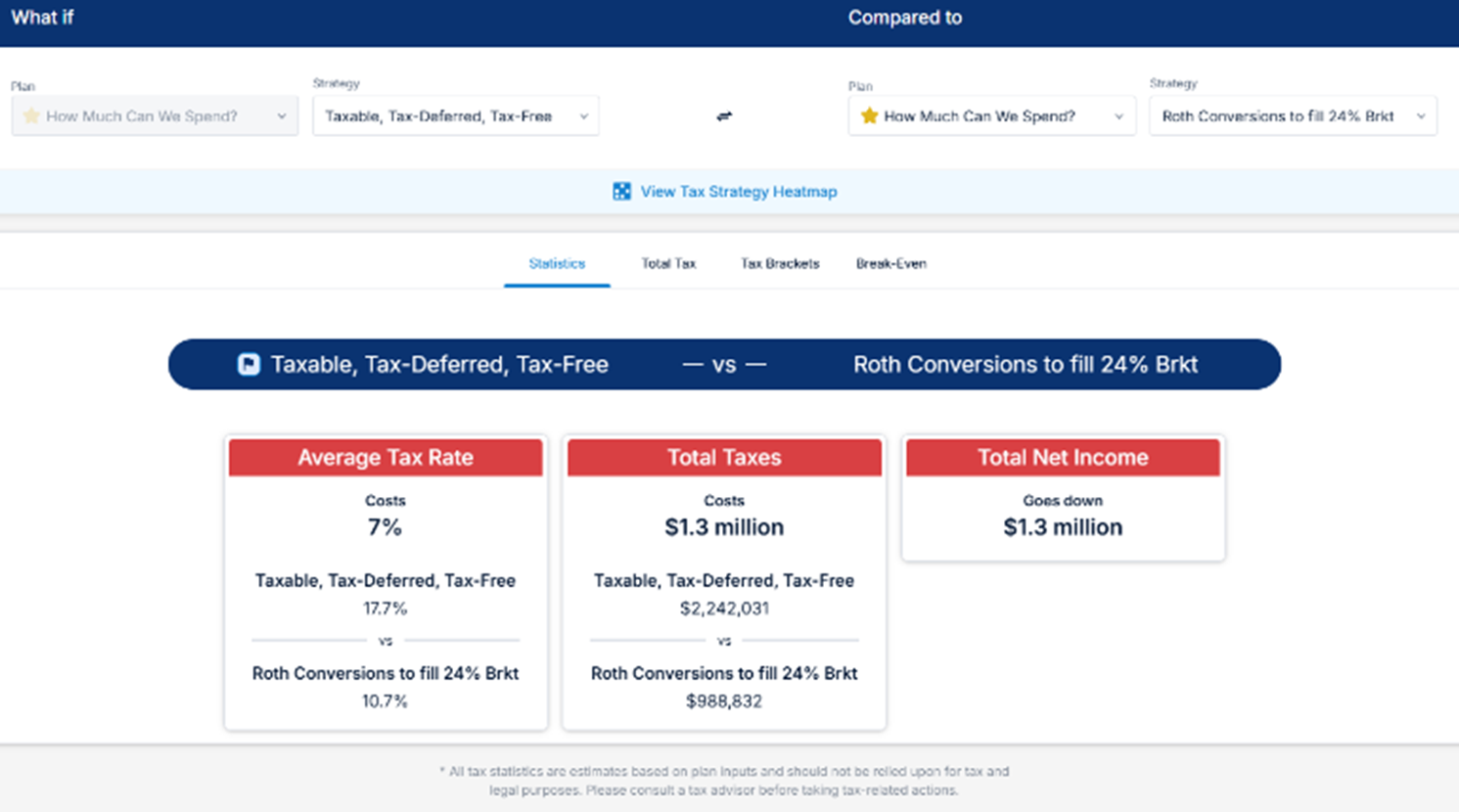
One tax planning strategy that can help manage this tax burden is called a Roth IRA conversion. A Roth IRA conversion transfers money from a traditional pre-tax retirement account into a Roth account. You pay tax on the amount you convert, but future growth and withdrawals can be tax-free.
Done effectively over a period of years, this strategy can minimize your lifetime tax bill. An added plus is that your heirs will inherit your Roth account tax-free. There is often a “sweet spot” to implement this strategy: early in retirement – before Social Security, pensions and RMDs begin.
While Roth IRA conversions can be a powerful strategy to mitigate your lifetime tax bill, they are not for everybody. The decision to implement this strategy depends on your specific situation and goals. Our Wealth Management team can help prioritize what matters most to you. Whether your priority is to minimize your total lifetime tax bill, or to maximize the inheritance you leave to your heirs, we’ll consult and use specialized technology to analyze relevant factors. Is a Roth IRA conversion right for you?

CONTACT US TODAY!

Patrick V. Masso, CFA®, CFP®
Senior Vice President
Director of Portfolio Management & Financial Planning
309-664-4504
*This e-mail link is for general inquiries only. It is not secure e-mail. For your protection, please do not include confidential or sensitive information such as social security numbers, account numbers, etc. when using this e-mail link.
Securities and Insurance products are NOT deposits of Heartland Bank, are NOT FDIC insured, are NOT guaranteed by or obligations of the bank, are NOT insured by any government agency, and are subject to potential fluctuation in return and possible loss of principal.
This information is not intended to be and should not be treated as legal advice. Readers should under no circumstances rely upon this information as a substitute for their own research or for obtaining specific advice from their own counsel.