
FDIC-Insured—Backed by the full faith and credit of the U.S. Government

Protecting Against Elder Financial Exploitation

Imagine your elderly friend or family member receiving a heartfelt call. The voice on the other end claims to be their loved one, urging them to act quickly to avoid financial disaster. This is the all-too-familiar scenario where criminals use Elder Financial Exploitation (EFE) to prey on vulnerable individuals, often in their later years when they are most susceptible to scams and fraud.

Older woman on phone looking troubled

According to the Financial Crimes Enforcement Network (FinCEN), analysis of EFE shows banks reported over $27 billion in suspicious activity between June 2022 and June 2023. The financial impact can be devastating—often leaving families not only financially drained but also emotionally drained by the betrayal of trust.

Types of Elder Financial Exploitation

  • Elder Theft – schemes that involve the theft of an elderly person’s assets, funds or income by a trusted person. Typically, criminals will repeatedly abuse their victims by liquidating savings and retirement accounts, stealing Social Security benefit checks and other income, transferring property and other assets, or maxing out credit lines/cards that are in the victim’s name.
  • Elder Scams – scams that involve the transfer of money to a stranger or impostor for a promised benefit or good that the older adult will never receive. These scams defraud victims into sending payments and disclosing their personally identifiable information under false pretenses. Common scams include government impostor scams, romance scams, emergency/person-in-need scams, lottery and sweepstakes scams, tech and customer support scams and more. Find out more about these kinds of scams.

Signs of Elder Financial Exploitation

  • Behavioral red flags may include the following:
    • Sudden or unusual changes in contact information or new connections to emails, phone numbers, etc.
    • Seeming nervous or leery while taking direction from someone over the phone.
    • Fear or submissiveness toward a caregiver.
    • Person is agitated about sending money immediately in the face of a supposed emergency of a loved one, but the money would be sent to the account of a seemingly unconnected third-party.
  • Financial red flags may include:
    • Dormant accounts with large balances beginning to show constant withdrawals.
    • Purchases of large numbers of prepaid or gift cards.
    • Multiple checks or wire transfers with descriptors such as “tech support services,” “winnings,” or “taxes.”
    • Sudden or frequent insufficient fund activity.

Protecting Against Elder Financial Exploitation

The Consumer Financial Protection Bureau offers many suggestions to take that can help protect elderly friends and family members from EFE including:

  • Use automatic bill pay.
  • Have checks directly deposited.
  • Encourage advanced financial planning.
  • Protect documents and personal/financial information.

At Heartland Bank and Trust Company, we understand the unique challenges faced by senior customers and are committed to providing tools that support financial security. If suspicious activity is spotted on your account, we’ll notify you promptly through email or text messages—free of charge, any time day or night. During verification, our fraud team may ask for details to confirm your identity but will never request your account number. Instead, they’ll ask you to review and verify any unusual transactions. This process is designed to be quick and efficient, ensuring we address potential threats without unnecessary inconveniences. For questions or concerns about suspicious activity, feel free to reach out—we’re here to help protect your financial well-being.


This article may reference and link to third party information that has been verified to the best of our abilities. There is no guarantee of accuracy. Heartland Bank does not endorse companies, services, or products referenced in its articles and is not responsible for the content, links, privacy or security policies of these third parties. Information in the above article may include material from FinCEN (https://www.fincen.gov/sites/default/files/advisory/2022-06-15/FinCEN%20Advisory%20Elder%20Financial%20Exploitation%20FINAL%20508.pdf#page=6), (https://www.fincen.gov/news/news-releases/fincen-issues-analysis-elder-financial-exploitation) and the Consumer Financial Protection Bureau website (https://files.consumerfinance.gov/f/documents/cfpb_ymyg_native-communities_preventing-elder-financial-exploitation.pdf#page=2).

Margie Johnson Promoted to Retail Manager

Heartland Bank and Trust Company is proud to announce the promotion of Margie Johnson to retail manager. Johnson, who has over 20 years of retail and management experience, and five years in retail banking, is located at Heartland Bank’s South Main Street branch in Farmer City.

About Margie

Johnson attended Heartland Community College and holds an American Bankers Association (ABA) Supervisor Certification. She is a current member of the ABA and a board member of the Lexington Food Pantry. Johnson stays active in the community by volunteering for the Lexington Food Pantry and fundraising for the American Cancer Society.

Johnson currently resides in Lexington with her husband. Together, they have four children. In her free time, Johnson enjoys her two dogs and helping people in her community.

Marjorie Johnson 198277 0004

Intern Stories: Zo Lombardo

Zo Lombardo is a Credit Associate Intern at Heartland Bank, joining the Credit Department on January 14, 2025. A native of the small Chicago suburb of Elgin, Zo is now a finance major at Illinois Wesleyan University.

Zo Lombardo Portrait

While at Illinois Wesleyan, he participated in a variety of activities. He has received a letter (a prestigious award given to students who excel in sports, academics or extracurricular activities) in lacrosse every academic year, achieved Academic All-Conference in his junior and senior years, worked in Dining Services for the campus cafeteria, was a Resident Assistant for a group of freshmen in his junior year, participated in courses that are involved in the IWU Endowment, and is involved in two different clubs, Private Equity and Investments and Trading.

Wanting to intern somewhere he would be valued and work towards his future, Zo reached out to his friends for advice. Zo had a discussion with former Heartland Bank credit intern, Daniel Flores who shared his great experience at Heartland. Daniel praised Heartland for their culture and impressive Internship program. After their conversation, Zo applied to the Internship program at Heartland Bank.

Outside of the internship and academics, Zo enjoys fishing, cooking, and working out. Zo has also played lacrosse in and out of school for the last decade.

Zo is gaining practical experience in credit analysis at Heartland. He has had a variety of resources—such as the Credit Intern Training Manual, recommended books, and practice examples—that have been incredibly useful. His mentors have played a significant role in his professional development.

One of the best aspects of the internship for Zo has been the mentorship. Jake Seckler, Credit Operations Officer, and Zo’s colleagues in the Credit Department have been so supportive and open, which Zo appreciates. Dan Ladage, Senior Credit Analyst, has always been eager to help and answer Zo’s questions.

Zo is thankful for the mentorship and help from everyone in the Credit Department. Everyone has been super friendly, and Zo feels lucky to work with such a great team.

When asked about their time working together, Jake said:

“From day one, Zo has fit in extremely well with the Credit team. He asks great questions and is always eager to learn as much as he can with each new assignment. I appreciate the positive attitude, strong work ethic and professionalism he brings to the job each day!”

I applied to the Internship program at Heartland for a few different reasons. Something that was important to me was finding an internship where I felt valued as a person, not just as a cog in the machine. Following my time at another finance internship where this wasn’t the case, I believed Heartland would offer me that opportunity.

I also wanted to be able to make an impact at a company while also being allowed to learn and grow. After discussions with a former intern here at the bank, it seemed like Heartland was a tight knit company with a true sense of community. I was used to this feeling from my time on different sports teams growing up in high school and college. It was a familiar feeling that I have welcomed back in my time at Heartland.

My day-to-day experiences vary with great exposure to a lot of different areas. My overall responsibility is to assist analysts and managers in the credit analysis process. For about six weeks, I also worked on an Excel project with Jake Seckler and Dan Ladage that I found very valuable.

A great learning experience was going over tax returns. Before this role, I hadn’t even seen a tax return so the experience I got from working in credit during tax return season was great! It was very beneficial for me to work with other credit analysts to learn how the returns flow and where to find important information.

I am unsure what the future holds. I don’t know what my career route will be, but I could see myself working in banking for most of my career and I know I want to start in credit. This internship has shown me what it would be like working in a credit department and the experience it can bring to your banking career. It has been very beneficial to have this experience at a growing community bank like Heartland!

I would tell anyone who was interested in banking to apply for the internship! My experience at Heartland Bank has been great, the hiring process was made smooth and easy by the hiring team, and it has been a pleasure to work with everyone within the Credit Team.

I am incredibly grateful for this opportunity. Comparing this internship to my last has been like night and day. I am so appreciative of the real work experience I have gained. It feels like every day I learn something new, and my overall knowledge of the departments across the bank has grown. I would recommend the internship to anyone who is interested!

Required Minimum Distributions (RMDs) Before Rollovers

According to a 2024 research report from the Investment Company Institute, 62% of U.S. households have Individual Retirement Accounts (IRAs) that have been funded with rollovers from employer plans. An estimated $595 billion worth of such rollovers occurred in 2020. Care needs to be taken that these transactions are handled properly to avoid unexpected tax traps.

Once a taxpayer reaches age 73, he or she must take Required Minimum Distributions (RMDs) from tax-advantaged retirement accounts. The first dollars being distributed from the account are considered to be RMDs.

Example: A taxpayer turns 73 this year and plans to retire. In anticipation of this happy event, the taxpayer arranges to have his entire 401(k) balance rolled over into an IRA. He makes the smart choice to have a direct rollover to the IRA custodian, avoiding the need for withholding taxes on the transfer. However, the taxpayer inadvertently has now rolled his RMD into his IRA, which is an excess IRA contribution.

The better way: The taxpayer determines that his RMD will be $40,000 this year. He orders a distribution to himself of the entire amount of the RMD, then orders the rollover of the balance of the account. With this approach, there is no question of even a temporary excess IRA contribution.

© 2025 M.A. Co. All rights reserved.


Securities and Insurance products are NOT deposits of Heartland Bank, are NOT FDIC insured, are NOT guaranteed by or obligations of the bank, are NOT insured by any government agency, and are subject to potential fluctuation in return and possible loss of principal.

Legal, Investment and Tax Notice: This information is not intended to be and should not be treated as legal advice or tax advice. Readers should under no circumstances rely upon this information as a substitute for their own research or for obtaining specific legal or tax advice from their own counsel.

Saving for College

Parents who are building a college fund for their child or children have two tax-advantaged alternatives, the 529 plan and the Coverdell Education Savings Account (CESA). Contributions to 529 plans and CESAs are not tax deductible, but there is no tax as the income builds up in the account. Distributions from the plans are tax free if they are used for qualified education expenses. The definition of what qualifies is not the same for the two approaches.

CESAs have one advantage over 529 plans. Where 529 plans are typically limited to just a few investment choices, with the money managed by the plan sponsor, there are no similar limitations for CESAs.

However, there are CESA disadvantages to consider also, where the 529 plan is superior. Most importantly, no more than $2,000 per year per student may be contributed to an Education Savings Account (ESA). Second, contributions must end when the beneficiary reaches age 18. Therefore, no more than $36,000 total may be set aside for one student, which almost certainly will fall far short of the financial need. Still, having a dedicated capital source that is growing tax free as one begins higher education is nothing to sneeze at.

A third problem is that contributions to CESAs are not permitted for those whose income is too high—modified adjusted gross income of $110,000 for singles and $220,000 for a married couple. No similar limitation applies to the 529 plan.

Successor beneficiaries

What if the beneficiary decides against college? The CESA accumulation may be rolled into another CESA for a family member of a beneficiary, or a new beneficiary may be designated for the 529 plan. The new beneficiary must be of the same or higher generation as the original beneficiary. Alternatively, subject to a variety of rules, unused 529 plan money may be rolled into a Roth IRA for the beneficiary.

The CESA must be distributed by the time the beneficiary reaches age 30 or within 30 days after that date. The distribution may be in the form of a rollover to another family member. Amounts not rolled over and not used for qualified expenses are included in taxable income, and a 10% tax penalty applies. No such age limits apply to the 529 plan.

Start early

As valuable as the tax advantages of CESAs and 529 plans may be, the biggest advantage is starting early. The sooner one begins setting aside funds for a college education, the more time that capital has to grow into something significant.

© 2025 M.A. Co. All rights reserved.


Securities and Insurance products are NOT deposits of Heartland Bank, are NOT FDIC insured, are NOT guaranteed by or obligations of the bank, are NOT insured by any government agency, and are subject to potential fluctuation in return and possible loss of principal.

Legal, Investment and Tax Notice: This information is not intended to be and should not be treated as legal advice or tax advice. Readers should under no circumstances rely upon this information as a substitute for their own research or for obtaining specific legal or tax advice from their own counsel.

Migration Patterns

When people decide to relocate, how do they choose a destination? Key factors will include job opportunities, family situations, and lifestyle changes, such as retirement. According to a recent study from the Tax Foundation, income tax rates are also a factor, especially for upper income folks who have more resources to draw upon in making their decisions (“Americans Moved to Low-Tax States in 2024,” https://taxfoundation.org/data/all/state/americans-moving-to-states/). The data comes from the U.S. Census and from industry moving companies United Van Lines and U-Haul.

The census data shows that the five states losing the most population in 2024 were Hawaii, New York, California, Alaska and Illinois. Those that gained the most were South Carolina, Idaho, Delaware, North Carolina and Tennessee. The moving company data offered slightly different rankings but, in general, confirmed the census data.

Digging deeper into the tax differences among the states, the study observed:

  • Of the 26 states that had per capita state and local tax burdens below the national average in 2022, 18 had population growth in 2024. Conversely, of the 25 with above average taxes, 17 lost population.
  • The top one-third of states gaining population had an average top state income tax rate of 3.5%. The bottom one-third, the population losers, had an average top tax rate of 6.7%, nearly double.
  • Six states in the top one-third have no income tax at all.
  • Twelve states have a flat-rate income tax, rather than a progressive system with escalating tax rates as income goes up. Of those 12, eight experienced population growth in 2024.

The pandemic altered employment patterns, enabling remote and hybrid work environments. According to the study, three states with “highly uncompetitive tax codes” enacted reforms to compete better with their lower-tax neighbors for jobs and businesses. These were Iowa, Louisiana and Arkansas.

Whether other states join the tax-cutting movement remains to be seen. One of the advantages of federalism is that the states can serve as laboratories for new ideas in governance.

© 2025 M.A. Co. All rights reserved.


Legal, Investment and Tax Notice: This information is not intended to be and should not be treated as legal advice or tax advice. Readers should under no circumstances rely upon this information as a substitute for their own research or for obtaining specific legal or tax advice from their own counsel.

Trust Modification

Sometimes a sound estate plan may need to be modified after it is put into effect. One such situation was recently outline in Private Letter Ruling 202504006 from the IRS.

A decedent’s estate plan called for the creation of two trusts, a marital trust for the surviving spouse and a decedent’s trust. Although the ruling doesn’t mention it, the decedent’s trust was likely funded so as to fully consume the decedent’s federal estate tax exemption while avoiding being included in the taxable estate of the surviving spouse. With the unlimited marital deduction, there was probably no federal estate tax due at the decedent’s death.

The marital trust was a Qualified Terminable Interest Property (QTIP) trust, which meant that the surviving spouse could not change the final disposition of the trust assets. The trust beneficiaries arranged under state law to divide the QTIP trust into two nearly identical trusts, leaving all income and remainder interests intact. The difference was that Trust 1 would be funded to take full advantage of the surviving spouse’s federal estate tax exemption, and Trust 2 would hold the balance of the assets.

The next step was for the surviving spouse to disclaim her entire interest in the newly created Trust 1. This was a transfer subject to the federal gift tax. By doing so, the surviving spouse consumed her entire federal estate and gift tax exemption—she “locked in” the exemption and will not lose should Congress decide to lower the exempt amount in the future.

The questions presented to the IRS were whether these actions required the recognition of gain or loss for income taxes, whether Trust 2 continued as a valid QTIP trust, whether the spouse would be treated as having made a transfer to Trust 2, and what the tax effects will be when the spouse dies. Happily, for this estate, there were no adverse tax determinations.

No numbers were presented in the ruling, but it seems likely that this estate saved millions of dollars in estate tax obligations with this modification.

© 2025 M.A. Co. All rights reserved.


Securities and Insurance products are NOT deposits of Heartland Bank, are NOT FDIC insured, are NOT guaranteed by or obligations of the bank, are NOT insured by any government agency, and are subject to potential fluctuation in return and possible loss of principal.

Legal, Investment and Tax Notice: This information is not intended to be and should not be treated as legal advice or tax advice. Readers should under no circumstances rely upon this information as a substitute for their own research or for obtaining specific legal or tax advice from their own counsel.

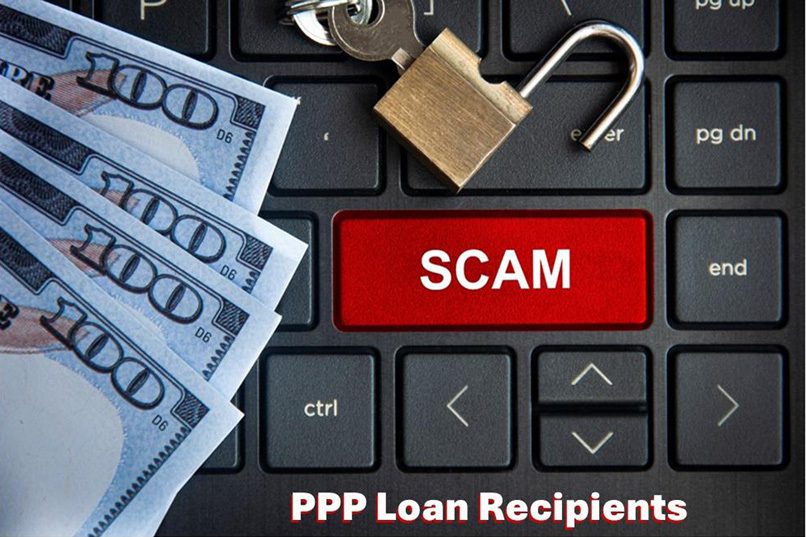
PPP Loan Recipients Targeted by Fraudsters

Businesses that received funds through the Paycheck Protection Program (PPP) are being targeted by a new wave of scams. Banks nationwide are reporting an increase in attempts where fraudsters use publicly available PPP loan data to impersonate bank employees attempting to obtain online banking credentials.

PPP Fraud Image 2

How the Scam Works:

Scammers pose as your bank, often spoofing the bank’s phone number to appear legitimate. They contact PPP loan recipients claiming to need to verify account details, assist with loan matters, or even help you stop fraudulent ACH or Wire transactions. They then attempt to trick you into providing your online banking user ID, password, and one-time security codes. With this information, they gain access to your account and can make fraudulent transfers.

Red Flags to Watch For:

  • Unsolicited calls or messages claiming to be from your bank.
  • Requests for your online banking credentials or security codes.
  • Inquiries about payments to individuals.
  • A caller who is overly helpful or aggressive, and they may even use a legitimate bank employee’s name.

What to Do:

  • Never give out your online banking login information over the phone. Your bank will never ask for this.
  • Hang up immediately if you suspect a scam.
  • Contact Heartland Bank directly using a well-known and trusted phone number. (Heartland Bank: 888-897-2276)
  • Report the incident to law enforcement.

Protect Your Business:

  • Educate your employees about this scam and emphasize the importance of verifying any suspicious requests. Stay vigilant and remember that protecting your financial information is crucial.

Resources:

For more fraud prevention tips, visit Heartland Bank’s Security Center.


This article may reference and link to third party information that has been verified to the best of our abilities. There is no guarantee of accuracy. Heartland Bank does not endorse companies, services, or products referenced in its articles and is not responsible for the content, links, privacy, or security policies of these third parties. Information in the above article may include material from the American Bankers Association (https://bankingjournal.aba.com), the Federal Bureau of Investigations website (https://www.ic3.gov/) and the Heartland Bank and Trust Company website (https://www.hbtbank.com/security-center).

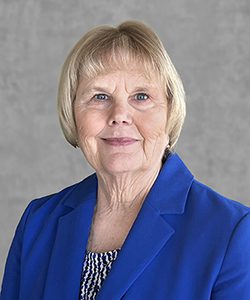
Joleen Williams Promoted to Retail Manager

Heartland Bank and Trust Company is proud to announce the promotion of Joleen Williams to retail manager. Williams, who has over 50 years of banking experience, most recently as a senior retail banker, is located at Heartland Bank’s Quincy branch on Maine Street.

About Joleen

Williams began her professional career after completing high school and is experienced in most aspects of retail banking.

A Quincy native, Joleen and husband, John, have two children and five grandchildren. They love to go camping together as a family.

Joleen Williams 193881

Employee Stories: Nick Nosalik

Nick’s Perspective – Relationship-Building and Commitment to Midwestern Values

Nick Nosalik is a regional retail manager at Heartland Bank and Trust Company. Nick’s story in the banking industry started in 2004 when he began his career as a teller at Citizens First National Bank. Since then, Nick has had an incredible journey building his career in retail.

About Nick

I’m Nick Nosalik, a regional retail manager at Heartland Bank. With over 20 years of experience, I’ve seen the bank grow and evolve, but one thing remains constant: my commitment to community and family values. I come from a close-knit family. I have a father named Dan, a mother named Rose and a brother named Nathan. We share a passion for classic cars. My dad and I both own 70s muscle cars that we take to shows together during the summer months. Golfing and watching the White Sox are our favorite sports pastimes.

a man in a suit and tie

My journey with Heartland Bank began in 2004 when I started as a retail teller at Citizens First National Bank. That bank merged with Heartland Bank. Over the years, I’ve held various positions, including teller supervisor, mortgage banker, consumer underwriter, assistant branch manager and eventually regional retail manager.

I’ve always enjoyed working with people and being involved in the community, which led me to the retail environment. As a regional retail manager, I strive to be an excellent leader and representative of Heartland Bank. My goal is to make a positive impact on customers’ lives and build strong relationships.

To advance my career, I’ve challenged myself to learn new skills and take advantage of resources offered by the bank’s Learning & Development Department. One subject that I have found to be beneficial to everyone is the importance of communicating with emotional intelligence. So many of the challenges we face at work and in life can be affected by how we choose to communicate. I encourage everyone to take the time to learn more about emotional intelligence as there are many resources available on LinkedIn Learning. I believe in embracing mistakes as opportunities for growth. I’ve been fortunate to have supportive leaders and role models throughout my journey who have encouraged my development.

My managers have played a significant role in my professional development, teaching me various leadership styles and helping me understand what works best for me. My co-workers are also valuable sources of knowledge and support and are always willing to lend a hand or share their expertise.

The culture at Heartland Bank is family-oriented, with a focus on building relationships rather than just chasing numbers. I’ve seen this firsthand during my visits to different locations, where I witness the kindness and honesty of ethical professionals in every department. Customers and co-workers alike benefit from this genuine approach, which sets the bank apart from other financial institutions.

I advise anyone looking for advancement opportunities at Heartland Bank that hard work truly pays off, even when no one is watching. It’s the little things that add up over time, and those who consistently demonstrate a strong work ethic are more likely to be considered for promotions. Don’t be afraid to challenge yourself and learn from your mistakes.

Whenever You Need Support, We're Just One Click Away